Wherever You Go: The Passport of Kemetic Government
– 4 min read


by Nezeziyah Sakuhai
“Kemetic government structure –even if you apply it in your life and anywhere you go, you are welcome wherever you go. Above all, it’s just that aspect of honoring the one in front of you… that’s the respect and the humility.”
–Neb Iritah Shenmira Naba
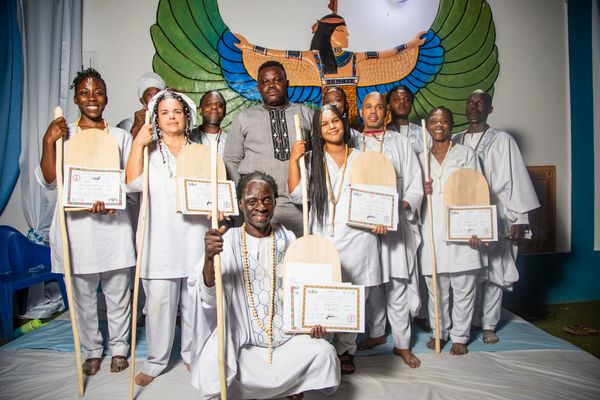
I’m taking on this challenge. How do I, someone being initiated into the culture, take something that seems distant, the Kemetic government structure, and apply it to a relatively modern lifestyle? For me, it begins with a precise understanding of the structure, including its foundation.
Family, the Fundamental Foundation
The Kemetic family structure is the fundamental foundation that strengthens Kemetic society and government. A child's family imposes rigid structure upon that child's life. From birth, each family shapes the individual's education with the goal that they not only become the best in their lineage but also worthy to rise to nobility.
Under the authority and guidance of the family patriarch and matriarch, children develop discipline and respect for their family structure. They then undergo initiation alongside their playmates, learning from each other’s craftsmanship and perfecting their own. The initiation of the child required them to practice respect and humility in every interaction, making these cherished qualities a lived reality rather than an intellectual ideal.
Respect and Humility
The concepts of respect and humility may seem apparent to Westerners, but they deserve reconsideration within a traditional framework of existence. Simply put, humility is having a modest view of oneself in relation to the whole of existence. Similarly, respect is recognizing the worth, dignity, authority, or position of the Divine and its creations.
Our Ancestors respected the principles of nature. They respected and humbled themselves before other Divine creations: human beings, the vegetation, the water world, the invisible, and the Divine itself. This posture of respect and humility formed the inner character on which government could be built.
Kemetic Government Structure
Because of this rigid upbringing, those who filled government positions already embodied the values needed to function in the larger structure. The Kemetic government is a highly ordered system of governance. It originally consisted of the Per-aha (origin of the word Pharaoh), Kings and priests. Per-aha translates to “Great House”. It was a powerful elite class of representatives from every bloodline in society.
Through cross-disciplinary practices, the representatives perfected themselves and their own disciplines. From the top of that structure, the Pharaoh (half-human, half-Divine) led with Divine legitimacy. Because of his total authority, the government structure could strive toward one unified goal: to ensure humanity's evolution and the harmony of the Divine creation on Earth, according to the vow that we made on the 19th of Tehuti (a Kemetic holy day (holiday) commemorating the anniversary of human enlightenment).
Application
Today, as a mother, wife, and initiate armed with this knowledge, I contemplate how to transmit the value of this government structure to my children. Recently I spoke to them about existential matters: their goals according to the divinations from their naming ceremonies, family values like humility and respect, harmonization, and how the Kemetic civilization produced solid families and perfect leaders.
They were quiet and peaceful the rest of that day. By the next day, their cohesion gave way to insults, embittered arguments, and power struggles. Eventually, I accepted that this, too, was a manifestation of the principle of harmonization – tensions arising so they can be resolved.
Bowing
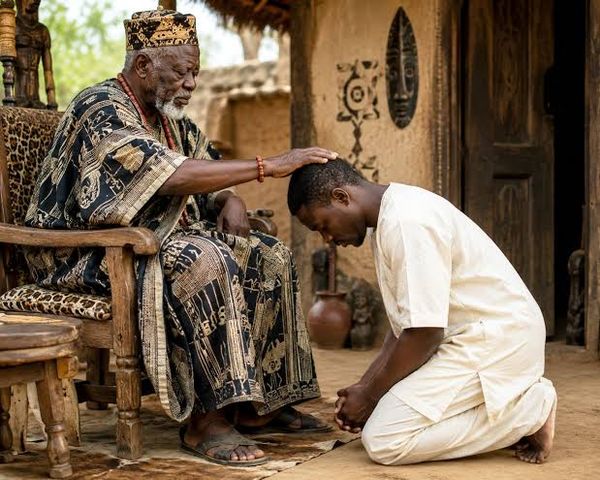
I had been really encouraging my children to bow automatically and consistently to each other and to our guests, not just to us parents. And not curtsy half-heartedly, like your bowels are troubling you, and you need to go, but to pause and bow deeply with intention and sophistication. Later I realized they did not fully understand the bigger concept behind this basic expression.
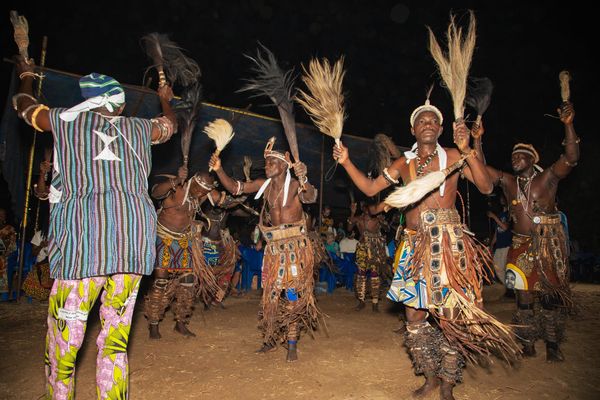
Bowing is a practice that expresses respect and consideration for the person or entity in front of you, or even for the Divine. When encountering royalty, you are especially obliged to bow in deference to their history and level of perfection. You also gain the blessings from the invisible structure that accompanies them. People in our community who are from the Gourmantché tribe teach this custom to everyone else. The Gourmantché preserve cultural values that stretch back thousands of years to Pharaonic society.
Some recent observations stay with me. My elder, who is American, arrives in town after a long bus ride. Together we visit our teacher's home to greet the matriarch, Grandmama. As we sit at her feet during small talk, Grandmama insists we rise, but my elder refuses (and I follow his lead). Later, in that same elder’s home, his wife, a Gourmantché, kneels all the way to the ground as she serves him a tray of flawless earthenware filled with food. She then hospitably serves me a plate.
The next time I sit with Grandmama, her grandchild presents herself to me in a bow, touching her fingertips to the floor like a ritual dancer. I know the respect is for more than me – it is for the family values and structure she's been taught, but it is also for the Ancestors that have contributed to my being.
I know that to be a good student, I must incorporate these practices into my life immediately and teach my children to do the same. Yet, I still ask myself: at what point does rote practice become embodiment? In the absence of a family matriarch at home, how do we ensure the transmission of values such as genuine respect and humility? How do people sustain community when physical distance separates children from the compounds of matriarchs and patriarchs?
I continue to ponder these questions, knowing that finding solutions will require both rigidity and adaptability. At the same time, I speak to my children's consciousness, because speech is powerful. My increased knowledge has given me clarity, allowing me to explain the value of basic concepts such as bowing, respect, and humility. I speak not only about performing an act, but also about the goal of embodying culture and having harmonious relationships.
Ultimately, Kemetic government has provided humanity with a timeless model of structure. When we function in a way that considers the harmony and evolution of the whole–starting in our own families, bodies, and daily gestures–we are applying the Kemetic government structure. That application is your true passport, wherever you go.