Untangling the Hidden Dangers of Hair Extensions
Reclaim your autonomy and the ways of our ancestors in Meritah, the cradle of civilization.
– 10 min read
Reclaim your autonomy and the ways of our ancestors in Meritah, the cradle of civilization.
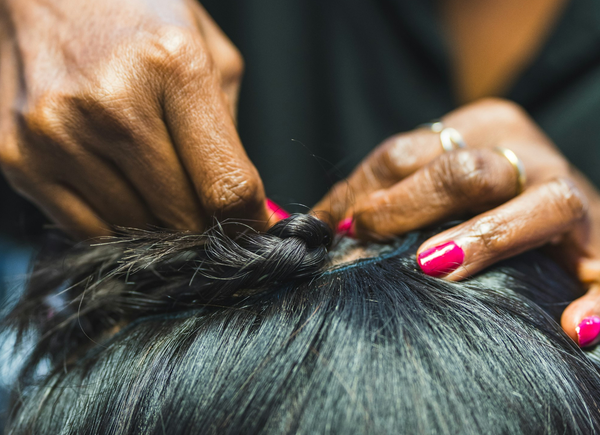
by Nezeziyah Sakuhai
“Are you turning into an alligator?” someone asked me.
The rash on my scalp and neck was scaly and silver, stinging like ant bites. It developed in the U.S. shortly after I began wearing jumbo box braids with synthetic hair. Back in Burkina Faso, I had returned to my short natural curls. At the Het-Aishat Healing Center in Togo, I bathed day and night in herbal infusions, warmed in a clay pot over an open fire. Gradually, the illness left my body, leaving marks like a peninsula’s edge against the brown sea of my back.
Within days of returning home in February 2025, I stumbled across a report with a chilling headline, “Dangerous Chemicals Were Detected in 100% of the Hair We Tested.” On the one year anniversary, a follow-up investigative report was released. These widely cited reports, based on scientific testing performed by Consumer Reports, are considered the most accurate published so far.
Collectively, out of 40 hair samples (including synthetic, human, and plant-based), lead was detected in 38 of them. VOCs (volatile organic compounds) were found in every single product. Separately, Silent Spring Institute did a well-known investigation of 43 hair samples. The results? It detected toxic chemicals like organotins, flame retardants, and phthalates in over 95% of the samples. These toxins are linked to skin irritation, reproductive and hormone disruption, leukemia (blood) and breast cancer, and kidney damage.
This should sound an alarm for everyone, but especially for Black women. In both the US and continental Africa, we are the primary consumers of hair extensions. We are the ones carrying this risk on our scalps, our skin and in our bloodstreams.
When this information first surfaced, another current was blowing from Burkina Faso’s capital: under a new policy, students could not attend class wearing “mesh,” as synthetic hair is called here. I knew my beautiful, impressionable curly-haired daughters would escape the weight of its influence. Still, as a grown woman, I remained tangled in the pull of extensions. An apple-cider vinegar pre-soak helped remove some irritants, but I’ve since had to face the truth: other toxins persist.
Over the past year, the scope of synthetic hair dangers has come into full focus. Still, today, synthetic hair thrives as a multi-million-dollar industry. Iif warnings about the dangers of synthetic hair extensions exist, why do so many of us still cling to it? But first, my beloved reader, I need to make sure that you are fundamentally clear on what is in this fiber that many of you, your sisters, or wives are putting on your heads, and into the heads (and minds) of your daughters.
Synthetic hair is not hair. It is a plastic garment shaped to look like hair. It is fabricated in laboratories or industrial plants by processing petroleum into petrochemicals. This process releases VOCs, or volatile organic compounds. Raw petroleum becomes gasoline for cars and jet fuel; refined petrochemicals become things like packaging, fertilizers, and synthetic textile fibers. Whether the finished product is branded Kanekalon, “acrylic” or “Brazilian wool” or under a new marketable name, the fibers are still plastic. They have chemicals embedded in their structure and chemical additives layered on top. These additives are used to make them flame-resistant, waterproof, and/or antimicrobial. Due to a lack of product transparency, many of these chemicals should be listed on the California Proposition 65 warning list but are not. Here are some:
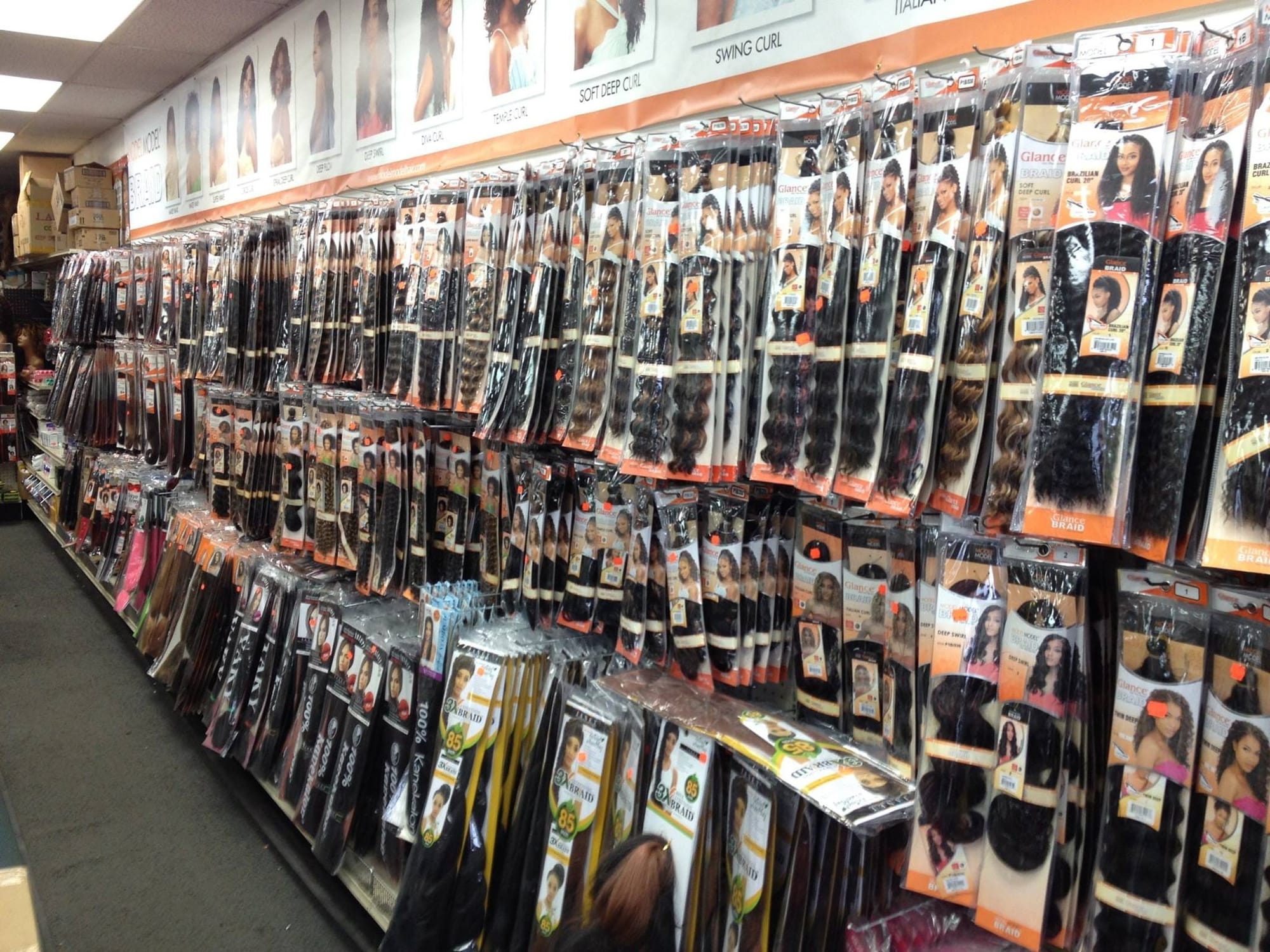
These are not hypothetical risks. They are documented toxins embedded in the very fibers many of us wear for weeks at a time!
Kanekalon - this is the “gold standard” or most widely used brand of synthetic hair fiber in the world. Kaneka is short for Kanegafuci Chemical Industry Co., Ltd; “lon” is short for nylon/acrylic polymers.
It may be easy to assume that “human hair” is the safer alternative. But human hair extensions often contain blends of up to four or five donors, and contain the highest levels of lead in testing.
It is also frequently treated with chemicals to give it shine. The fibers are porous and can absorb whatever substance (like lead) that the donor was exposed to. Those toxins then leach out into the recipient’s scalp.
Beyond simple chemistry, there is also an energetic reality. At sacred temples like Het Aishat Healing Center, energetic science is treated as a guiding authority. In old cultures, organ transplant is frowned upon because you are bringing the energy of another’s life and experiences into your body. Similarly, placing a person’s hair on your head is not a neutral act.
Compared with other synthetic garments, hair extensions are more risky for a few reasons:
Through these pathways, toxic chemical residues rapidly enter the bloodstream and eventually circulate to our brains and bodies. For many of us, it is chronic and repeated.
Despite being dangerous to both the hair braider and client, extensions have been normalized. They appeal to millions of consumers who seek convenience, volume and length, versatility and longevity. They allow us to achieve the intense styles we love as black women. We enjoy the benefits, then discard the extensions, rarely questioning what is inside them. But we must ask: how many people have been dispossessed and killed for the petroleum taken from their lands just to feed a global appetite for packaged plastic beauty? How many ideological lies have been told to sell Black women this aesthetic?
In many homes touched by modern influences, a child is conditioned to believe her hair is not naturally beautiful. Many young women are told directly or indirectly that all men prefer long, straight hair as if this were a universal truth and a valid reason to hide our natural hair. It's a classic and historical case, where the imperialist flashes something shiny and intriguing, and in our fascination we surrender what we already have that is well-rooted, valuable and dignified.
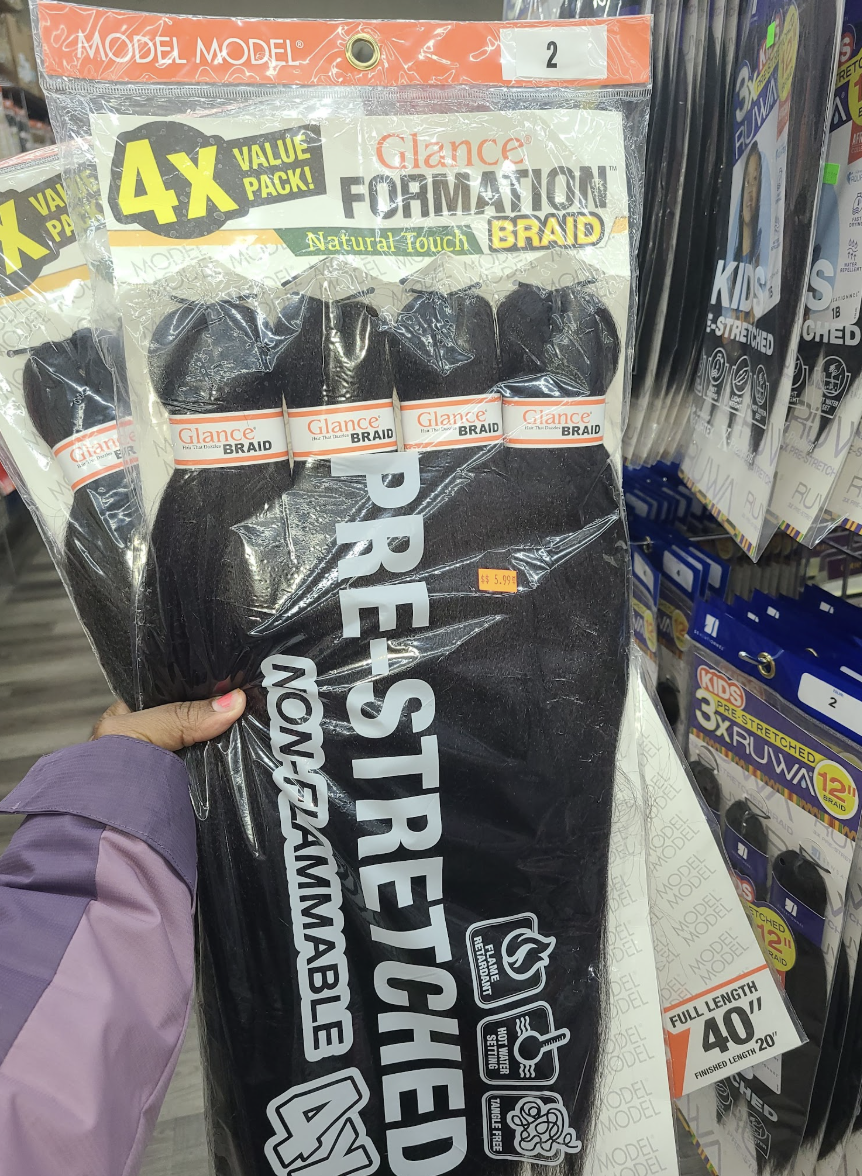
There is a vast information gap around extensions, both in the US and across Africa. In many parts of Africa, women who communicate primarily in French and local languages may not fully grasp English or Chinese labels or the implications of phrases like 100% acrylic. ‘Acrylic’ means plastic. ‘Fiber’ means plastic. How many of us who speak English as a first language were clear on that?
Modern media, which spreads information in modern cities, has only begun to touch the topic. Very few studies on the hidden dangers of hair extensions have been conducted in continental Africa. Recently a Nigerian organization conducted a study, with similar findings as Western institutions. As more African based researchers and advocates take interest, the issue may gain more visibility. But for now, on the continent where it’s probably happening the most, many women remain in the dark, misinterpreting the tell-tale signs of itchiness, burning and pain as simply “tight braids”.
Stylists, mothers and aunties end up reinforcing the idea. I recall my former stylist criticizing me when I warned that my daughters’ braids were too tight.
"You're teaching your daughters to fear pain,”
she said. I answered that pain is not a weakness, it is the body’s alarm system. When extensions are added, and chemicals interact with broken skin, the pain escalates. Yet, we are told to endure, to “toughen up” and to normalize the very symptoms and alarms that should be making us stop.
Several industries interplay to deliver hair extensions to our heads. The global wigs and extensions market, heavily dominated by China, thrives as a multi-billion dollar industry, with synthetic hair being one of its major profit engines. It first exploded into the global markets in the 1960s and is actually manufactured in the chemical and textile industry, which operate under different regulatory frameworks than the cosmetic industry.
In the United States, for example, cosmetics fall under some level of oversight by the Food and Drug Administration. Synthetic hair, as a textile, does not face the same scrutiny. There is no requirement for full disclosure. Lack of transparency is built into the system.
Meanwhile, more and more women are filing lawsuits. They face legal hurdles, including proving the liability of corporations and establishing that toxin levels are unacceptably high. As the regulatory system stalls, reform moves slowly and our communities remain at risk.
I’m not asking anything outrageous of you, just to think critically. Reclaim your autonomy and the ways of our ancestors in Meritah, the cradle of civilization. Our ancestors knew better than to knowingly poison themselves. They aligned themselves with nature. I encourage you to seek balance: reduce your reliance on petrochemicals, scale back on the lipgloss, ditch the fake eyelashes, nails and/or avoid hair extensions.
When I look at modern hair imports now, I see visible symbols of maladaptation, capitalism, greed, and sicknesses. It reminds me of the cigarette boxes littering the roads in my African city– they are covered with large, gory images of mutilated organs and diseased lungs. Many African countries require such graphic images for cigarette packaging as a form of warning.
Imagine if Chinese hair manufacturers were required to display images of chemo patients, heads bald as calabashes, on their imported hair packaging. Even our African sisters at the beauty boutiques would do a double-take when reaching for the next bundle of hair. We need to cleanse our cities, our salons and our lives of this garbage.
Our ancestors in Kemet sometimes wore extensions and wigs, as evidenced by artifacts in British museums. They were made of diverse natural materials including human hair (I don’t know how they approached the issue of negative energies), and vegetable fibers like palm leaf and flax, which were sometimes wrapped or secured with linen, beeswax and natural resins. Historically, hair extensions were not always toxic.
Today, some innovators are searching for more natural and sustainable sources of hair extensions. One popular brand, for instance, sources hair fibers from renewable and biodegradable banana fibers. The hair fibers, though dyed, have lower levels of VOCS and trace lead compared with petroleum-based synthetics. However the price is around $35 USD per bundle, which is ridiculously high for many women. Suppliers are trying to find ways that these fibers can be mass reproduced. Once supply and demand increases, prices are likely to decline. At the end of the day, we may consider our options but why desperately remain at the mercy of corporations like this, as if they are the only lifeline.
A more practical approach is to cultivate self acceptance and to honor the hair we’ve inherited from our Ancestors. We must seek out stylists and supportive women who understand the value of natural hair and the patience and nurturing it requires.
A Stylist’s Perspective
I spoke to my friend Gerri, a Chicago-based licensed cosmetologist for sixteen years and owner of the School of Hair Braids, Loc's & Afro Art, which offers workshops to teen girls.
“You gotta take a chance on things,” she told me. “But I know for one thing, I’m not taking a chance on something that I know is causing me harm.”
When asked if she incorporates synthetic extensions in her workshops, she replied,
“We use mannequins. What I’m thinking of doing is just using the yarn. They’re still going to get lessons on things like that. Let me caution you on synthetic hair. Now what you do when you leave here, that’s on you, but be aware.”
“If we can reflect..everything directs us right back to Africa. If you look back before all that took place, extensions were not a thing. It was just natural hair. What did we do before? Sometimes you have to go back like a sankofa bird and you have to snatch and retrieve that that was of value and importance, and teach that to people. That’s what we did. That was our tradition and our culture.
We should go back to what we were using before we started introducing extensions to our hair. They would use cattle dung, they would use all kinds of things to create stature, to point their hair towards the sky. They would even use twigs. You can use very inexpensive pipe cleaners. They’re taking pipe cleaners, wrapping it around the root and then twirling it around your dreadlock or braids. So it’s so many different creative things. There’s so many things out in the natural elements that we can use if we only just think about it. I’ve heard that they also use pineapple [fiber]. And natural is the better way. And if you want to add something to it, always be cautious and always do research about what you are putting in your hair.”
She also pointed out that many men with locs and braids choose not to wear extensions at all. A simple online search will show you their beautiful natural styles.
Authors note:
All hair Samples in the Consumer Report and Silent Springs Reports contained VOCs (Volatile Organic Compounds) and known carcinogens
Dosso Beauty Hypoallergenic Kanekalon Fiber was the only tested product that was both lead-free and contained small amounts of carcinogens