The Greatest Crime Against Humanity - Ghana’s UN Resolution on the Transatlantic Slave Trade
The importance lies in waking up every spirit whose eyes meet these words from the hypnosis of baseless white supremacy that has ruled the world and blocked us from unifying around our common origins and our common need for survival and evolution.
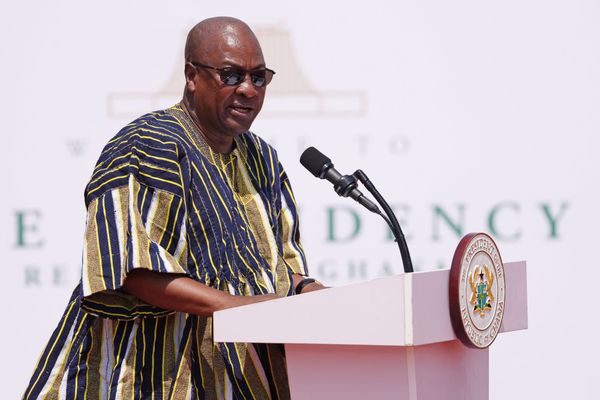
On March 25, 2026, the UN General Assembly adopted a landmark resolution spearheaded by Ghana, recognizing the transatlantic trafficking of enslaved Africans and racialized chattel enslavement as “the greatest crime against humanity.” In the words of Ghana’s President John Mahama, the transatlantic trade constituted “a definitive break in world history” because of its “scale, duration, systemic nature, brutality and enduring consequences.”
The resolution (A/80/L.48) passed by an overwhelming majority: 123 member states voted in favor, three voted against (the United States, Israel, and Argentina), and 52 abstained, including the United Kingdom and several EU states. It is not legally binding as Security Council resolutions are, but it carries real moral and political weight in international law and ongoing reparatory justice debates, especially at a time when the UN says it is focused on reparatory justice.
For the past month, many have been asking: What could be in the minds of the United States, Israel, Argentina, and the 52 countries that chose silence? Is it really a question that the enslavement, torture, and cultural annihilation of African peoples across various countries and the resulting systemic warfare on Earth’s largest continent constitute a crime against humanity? Or is it Mahama’s addition of the word ‘greatest’?
Calling Out Crimes Against Humanity
UN‑backed bodies have long applied the label “crime against humanity” to other historical moments when the worst of human nature has been on display. The most publicized example is the persecution and mass murder carried out by Nazi Germany in the Holocaust and surrounding atrocities. The Nuremberg trials, where senior Nazi leaders were charged with crimes against humanity, set the precedent for later prosecutions.
The International Criminal Tribunal for the former Yugoslavia (ICTY) prosecuted crimes against humanity committed during the wars of the 1990s in the Balkans, including ethnic cleansing, mass killings, and systematic sexual violence against Bosniak, Croat, and other civilian populations.
The International Criminal Tribunal for Rwanda tried leaders responsible for the 1994 genocide against the Tutsi. Charges included murder, extermination, persecution, rape, and other inhuman acts as part of a broader genocidal campaign. In Cambodia, the Extraordinary Chambers in the Courts of Cambodia tried Khmer Rouge leaders for crimes against humanity arising from forced evacuations, mass executions, starvation, and persecution in the late 1970s.
Beyond these formal tribunals, UN bodies and international practice have framed several other historical episodes as crimes against humanity or within the broader category of “mass atrocity crimes” (genocide, crimes against humanity, war crimes, and ethnic cleansing). These include the Armenian genocide of 1915–1916, apartheid in South Africa, and systematic state campaigns of murder, disappearances, torture, and persecution under Latin American military dictatorships, regimes in which Argentinian leaders, ironically, played a role.
Under the Rome Statute of the International Criminal Court, which reflects the most up‑to‑date consensus on this category, crimes against humanity include acts such as murder, extermination, enslavement, deportation or forcible transfer, imprisonment in violation of international law, torture, rape and other sexual violence, persecution, enforced disappearance, and apartheid when committed as part of a widespread or systematic attack directed against any civilian population.
By that definition, which has been accepted since 1998 and still displays on the UN’s official website, any of the horrific voyages of the countless slave ships that crossed the Atlantic qualify. Anyone who has stood inside a slave castle, descended into a dungeon, or studied slave auctions, slave breaking, slave breeding, and the regimes of terror on plantations in the Americas understands that the label would not be an exaggeration.
Now consider that all of this did not unfold over a few months or years. We are not talking about the twelve‑year run of the Holocaust, the four years of Khmer Rouge rule in Cambodia, the year of the Armenian genocide, or the nine months of the Balkan wars. We are talking about more than four centuries of enslavement, torture, and genocide, coordinated across continents.
So, the question remains: what would make some stay silent? How could three countries even muster the gall to vote in opposition?
Resistance at the UN Today
Israel justified its “no” vote by warning that naming this as the greatest crime would “risk diminishing the gravity of other atrocities, including the Jewish Holocaust by the Nazis.” The United States called the text “highly problematic in countless respects” and claimed the UN was not created to “advance narrow specific interests and agendas.” The explanations sound technical. However, beneath them lies a deeper discomfort with allowing the trade to be named for what it is, as they know it lies at the foundation of the states and economies they represent.
To further understand why so many states would resist this recognition, we must look beyond legal categories to the deeper civilizational lie from which the transatlantic trade grew, nourished, and organized the modern world.