by Nedjnima Fateksaou

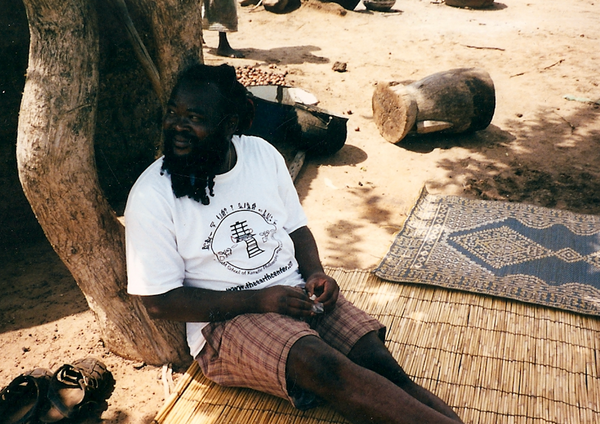
In the silences of history, where ancient civilizations were often relegated to oblivion or erasure, certain figures emerge to revive the memory of peoples and re-establish the links between past and present. Neb Naba Lamoussa Morodenibig belongs to this category of men whose thought transcends their time.

The Maakheru, the teller of truth, was not merely a thinker or a transmitter of knowledge. He embodied a true intellectual, philosophical, and spiritual renaissance founded on the rediscovery of the Kemetic heritage. In a world searching for identity and bearings, he dared to question dominant narratives in order to rehabilitate an African memory long marginalized. Through his teachings, he reminded us that Kemetic civilization was not simply a glorious past, but a living source of knowledge, spirituality, and universal wisdom at the origin of many civilizations.
His work is rooted in a dynamic of reconnection. Reconnection to oneself, to ancestral culture, to the sacred, and to the fundamental principles that link humankind to the cosmos. For him, knowledge was not an accumulation of theories, but an inner experience, a path of transformation, and a way of life. He invited everyone to transcend the limitations imposed by historical amnesia in order to rediscover a deeper awareness of their identity and mission. The Maakheru thus opened new paths for those who aspire to cultural and spiritual reappropriation. His message resonates with particular force today in an era marked by identity crises, a loss of meaning, and a break with essential values. More than an intellectual legacy, he leaves an invitation: to revive Kemetic memory not as nostalgia for the past, but as a light capable of illuminating the present for a better future.

Through his thinking, one conviction remains: a people who rediscover their memory also rediscover their dignity, their creative power, and their capacity to contribute to the elevation of humanity.

Share this post

Written by

Comments