Echoes Beyond Prison Walls: A Call for Global Solidarity with Djeukam Tchameni
Imagine being imprisoned for your political beliefs, for challenging those in power, for organizing against the status quo, for speaking out against corruption.
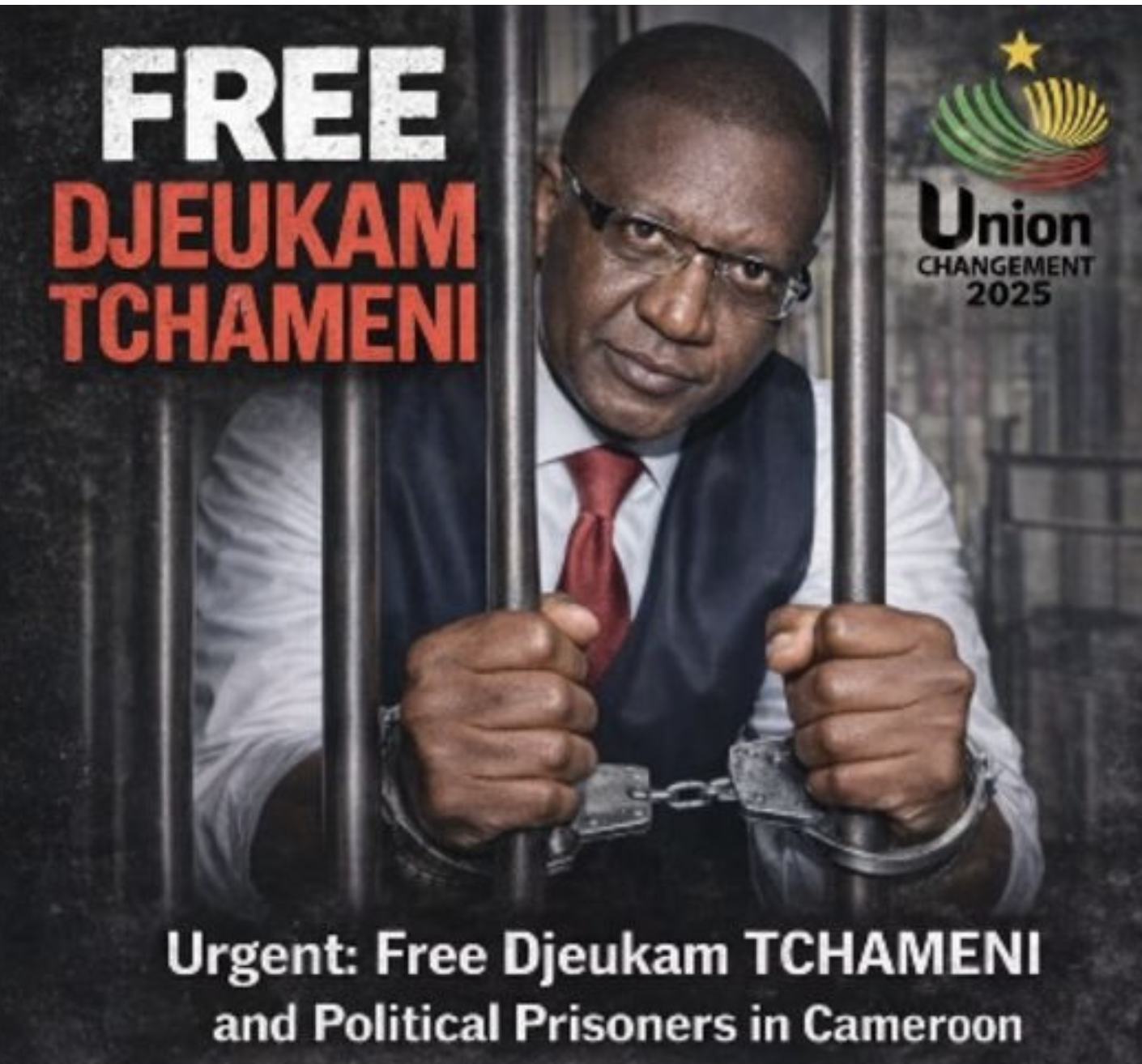
Imagine being imprisoned for your political beliefs, for challenging those in power, for organizing against the status quo, for speaking out against corruption. This is the reality for Djeukam Tchameni, now a political prisoner in Cameroon. But in truth, Tchameni could be anyone, your neighbor, your teacher, your spouse, your friend.
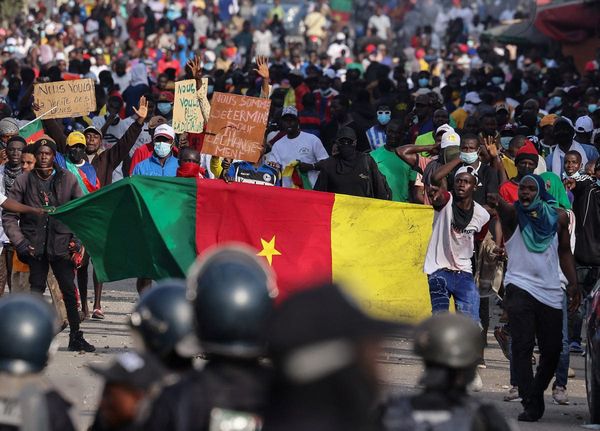
For decades, Tchameni worked to advance social and political change in a country that has remained under the leadership of Paul Biya, a president who has held power for over four decades. Following the 2025 presidential election, widespread protests erupted amid allegations of voter fraud and election manipulation. In the aftermath, opposition leaders including Tchameni were detained in a sweeping crackdown.
Tchameni was arrested alongside his longtime ally, Anicet Ekane, with whom he spent over 35 years advocating for self-determination and unity across Cameroon and other African nations. Their work represents a broader movement of individuals committed to justice, dignity, and freedom from imperialism, often at great personal risk.
Tragically, Ekane passed away in prison just weeks after his detention due to medical neglect. His death underscores urgent concerns surrounding prison conditions, frequently characterized by overcrowding, poor sanitation, extreme temperatures, and limited access to basic necessities. Compounding this further, prisoners often rely on family members to provide their sole daily meal, and many notable prisoners may be transferred far from their support networks, deepening their vulnerability.
Tchameni’s wife Makini, a U.S.-born educator now based in Burkina Faso, has spent years building schools for youth while tirelessly advocating for her husband’s release. She describes him as “a prisoner of conscience: someone imprisoned not for any crime, but purely because his political beliefs differ from those in power.” Despite significant obstacles, she continues to engage legal channels, diplomatic offices, and grassroots campaigns gathering public support and refusing to abandon the pursuit of justice. “We are doing everything we can to bring him and others like him home,” she writes. “This is the reality my husband lives with every single day, and it weighs heavily on our family.”
From prison, Tchameni authored a book without a pen or paper, dictating it under constrained conditions via monitored phone calls offering a firsthand account of Cameroon’s political climate, the realities of incarceration, and the broader struggle for human dignity. Originally written in French, the work is currently being translated into English to expand its reach.
Those who risk their freedom to speak truth and demand accountability do so knowing the cost, yet they persist. Their voices carry beyond prison walls, calling attention to systemic injustice and the need for global solidarity. Tchameni’s story is one of many but it is also a call to each of us.
As Makini puts it: “I’m not asking you to be a political expert. I’m simply asking you to stand with us in saying that what is happening here is wrong and that these people deserve justice, dignity, and freedom.”
Raise awareness. Contribute resources. Amplify this story within your networks. Collective action brings attention to these cases and applies pressure where it is needed most. Justice does not happen in silence, it happens because people refuse to stay quiet.