by Kasabez Maakmaah
It’s probably late to be entering the conversation on the meaning of mental health. Maybe, but when the same societies writing the books on mental health are finding themselves in a continually deepening mental health crisis their whole approach will have to be cross-examined. What tends to get lost in the noise of all the discussion on mental health is the fact that there are much older societies than the ones experiencing these crises and what they would have to say on the topic. Far be it from this author to claim to be an expert in these matters, but it's fair to at least ask why certain societies are the ones entrenched in this problem and why they don’t look for help from those who aren’t. Let's look deeper at some of the modern approaches to mental health.
In May, 2023, in observance of Mental Health Awareness Month in the United States, the National Alliance on Mental Illness launched its “More Than Enough” campaign. The premise of this campaign is that, in the name of your mental wellness, they are declared:
We want every person out there to know that if all you did was wake up today, that’s more than enough. No matter what, you are inherently worthy of more than enough life, love and healing. Showing up, just as you are, for yourself and the people around you is more than enough.
That’s right, even without a shower or brushing your teeth, or getting dressed, showing up just as you are isn’t just enough, it’s more. Let’s dig a little deeper and examine the implications of this campaign. The basic message can be interpreted to say, “No effort expected, no effort given, no problem. Better yet, thank you, round of applause, take a bow.” Before we respond with pity or self-pity and say this is for those living with mental illness, let’s note that, right now, it’s estimated that 1 in every 5 Americans is now living with some form of mental illness and 50% of teens experience mental illness. Should we now accept that 50% of high school students “just show up as they are” without their homework done or maybe just skip school entirely or just hang out all day in the lunchroom and say they’ve done “more than enough” and pat them on the back because they’ve had some sort of diagnosis?
Apparently, the message is that having expectations for ourselves and each other is a problem contributing to depression, mental illness, etc. but let’s pause to consider what a world without expectations would be like. The reason we have food to eat every day so we can live is because somewhere there are people who take responsibility for producing and supplying it for us to buy and we expect these goods to be available for us to buy. If at some point, goods and necessities aren't being delivered to us as expected, we will have a serious problem, regardless of the reason.
Any parent knows for sure that they can’t just wake up and think everything will be okay for their children. If 20% of Americans suffer from mental illness, many of them are parents. If that becomes the excuse not to take care of their children, their children can be taken from them and they can go to jail. Next, the children will blame their parents for their childhood trauma and resulting mental instability, and the cycle continues.
The logic of acceptance of mediocrity and lowering expectations to improve mental health follows the same logic that tells us that experiencing difficulties is a risk factor for mental illness. According to the World Health Organization (WHO),
Exposure to unfavorable social, economic, geopolitical and environmental circumstances – including poverty, violence, inequality and environmental deprivation – also increases people’s risk of experiencing mental health conditions.
They go on to add:
Harsh parenting and physical punishment is known to undermine child health and bullying is a leading risk factor for mental health conditions.
Before commenting on the implications of this approach to mental health, let's look at how mental health is defined according to the WHO:
Mental health is a state of mental well-being that enables people to cope with the stresses of life, realize their abilities, learn well and work well, and contribute to their community. It … underpins our individual and collective abilities to make decisions, build relationships and shape the world we live in. Mental health is a basic human right. And it is crucial to personal, community and socio-economic development.
Any time we are told we have a right, we feel empowered, and in that feeling, we often don't question the real message or the motive behind it. In saying mental health is a right, it can only be a right if it's guaranteed, and for it to be guaranteed, there must be a guarantor. Let's note that the WHO is not a government agency or authority capable of guaranteeing anything, and since the almighty power of all powers has not created a world free from hardship, the implication is that a responsible and benevolent government will guarantee the right of mental health for all its citizens by somehow eliminating "poverty, violence, inequality and environmental deprivation" and forbidding "Harsh parenting and physical punishment".
Obviously, this is entirely impossible, even if we convince ourselves it's ideal. In the case of our self-proclaimed developed, 1st world societies, the consequences of this contradiction to reality are far reaching.
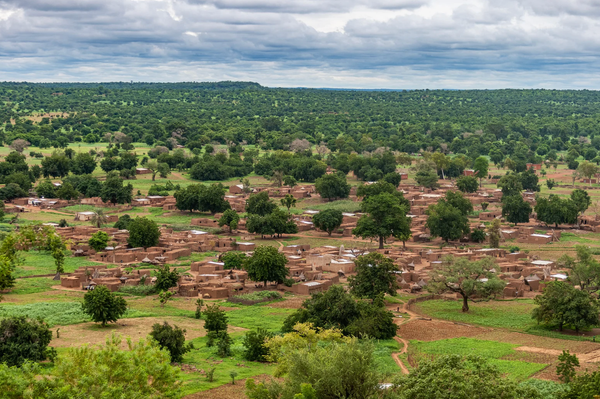
If a society's aim is to produce an ideal set of circumstances for each individual to thrive, that should be reflected in the wellbeing of its population. But a human society can only be made up of human beings. If individual citizens are able to depend on their society, it's because of the dependability of the citizens themselves. In a society that takes care of its citizens, for example in indigenous African societies, each individual will see themselves as part of a larger unit, usually their family, which is in turn part of a community or village, which could be part of a clan, which is part of a tribe, which is part of a kingdom. It takes the collective effort to produce what every individual needs.
This idea can be summarized by the now popular Xhosa word "ubuntu" which translates roughly to "I am because we are". It's the collective that gives each individual their place, and everyone's place is meaningful to the functioning of society. If the society then adopts the philosophy that in the face of difficulty, one can just take a pause for mental health and feel validated by the fact they were able to roll out of bed, how will that affect the others who are depending on them? By the same logic, won't that affect the mental health of others?
Indigenous societies have solved this by having a collective social framework where each one's day to day life is spent around other people. Work is done collectively, and even if it's tedious, difficult or even dangerous, the time is spent telling stories, reminiscing about experiences, joking, laughing, singing or giving lessons. The camaraderie keeps the collective spirits high. Even in the case where an individual is suffering hardship, it's easy to identify and the community comes together to help.
Now in our developed world, we feel free because we are no longer required to be accountable to our families. We turn 18 and we get to do whatever we want, regardless of what our parents or anyone else thinks. While we rejoice at our liberation, we don't consider that whatever rights we feel like we're entitled to have to be granted by some power, and since were aren't accountable to our families and communities, our families and communities aren't accountable to us, we all have the depend on the government to guarantee our wellbeing, and that's why we need police, jails, lawyers, politicians and every bureaucratic agency we are now blaming for all of our problems.
The basic contradictions between human idealism and the reality of existence start here and the subsequent depression, stress, anxiety, etc. of living with this disconnect are easy to predict for a thinking person.
We can make a clean break from our illusion that these new, developed societies are supposed to take care of us with this simple observation: the existence of a mental health crisis is already compelling evidence that our societies were not created with the wellbeing of their populations in mind. Life in the so-called first world has reached a level of confusion that is hard to describe, but which guarantees the perpetual torment of mostly all of its members, regardless of race, class, wealth, religion or political affiliation. The simple question of what the next 5 to 10 years is likely to be like is already enough to induce a state of distress and panic if one ponders the very real possibilities we are confronted with.
In this situation, telling someone they have a right to mental health is almost like telling a drowning person they have a right to fresh air, but the way to get it is by sinking deeper under water.
The reality we're faced with is if we plan to survive what's happening to us, we will have to take our survival into our own hands. Nobody's coming to save us. How will we survive what are arguably the most uncertain and dangerous times in human history by reducing our expectations of ourselves to simply getting out of bed. In a world where leaders are loudly proclaiming the Earth is overpopulated, do we not see they're talking about us?
If we treat stressful situations as a health risk to always be avoided, forgetting that there are some situations we don't have the option of preventing or hiding from, then we are setting ourselves up to be ill-prepared for when we will have to face them. The message from our mental health experts is, even if you fail and your life is falling apart and your are spiraling in a cycle of anxiety and depression, unable to function with other people, lonely, strung out, homeless, as long as you can get up out of bed at some point during the day, you're doing more than enough… Is it clear enough yet that we're being set up?
Hmmmm… let's look deeper into some of the "risk factors" the WHO warns us of. Before we take their explanation at face value, let's ask ourselves some questions first:
- As “exposure to unfavorable social, economic, geopolitical and environmental circumstances,” are the “risk factors” the modern system is focusing on, are the interventions being put in place to prevent those risk factors resulting in better mental health of the general population?
- Are the treatments being used for the recovery of the mentally ill resulting in better mental health of the overall population?
We can simply answer no to these as we continue to see rates of suicide, mass shootings, drug dependency and overdose, and other less tangible indicators of mental and emotional instability on the rise to the point they can no longer be ignored. In this case, all the risk factors and outcomes associated with mental health and lack thereof have to come into question.
Let’s look again at some of these various circumstances now being considered risk factors. Historically speaking, we can say with some confidence that the current mental health crises we are now seeing have only surfaced recently just like many of the other diseases which, with the minimum effort, we can be sure are clearly modern, meaning 100 - 200 years ago, they didn’t exist or were barely a factor (cancer, diabetes, autism, etc.). How are the medical and scientific fields explaining the rather sudden explosion of this crisis in a meaningful way? The so-called risk factors have always existed. For example, children have always been subjected to harsh parenting and bullying. Ironically, it’s only now that we are trying to protect our children from spankings and name calling that we see 50% of teens are estimated to be mentally ill.
Let’s look at poverty. This is a term that certainly deserves some examination. If we define those who are living now in the 21st century without electricity, running water, refrigeration, internet, modern schooling, or modern infrastructure in general as impoverished, let’s remember that this modern infrastructure didn’t exist 100 - 200 years ago. At the same time, humanity was not experiencing the alarming rates of depression, social dysfunction, suicides, etc. that we see today. The question deserves to be asked and seriously considered, when so many young people in countries we consider wealthy are questioning if life is even worth living, what is the value of wealth? Wealth is wealth because it has value, meaning it has value to the human being, but the human being of modern society is having difficulty finding anything valuable enough as reason enough to wake up every day and face life. If this is the case, who is wealthy and who is impoverished?
Poverty is synonymous with lack, but specifically lack of something necessary. If the vast majority of humanity lived for millions of years without electricity, running water, etc., then can we really consider those necessary? Meanwhile, when individuals in a developed society who have everything the modern ideologies associate with wealth are killing themselves or immersing themselves in behaviors that are clearly self-destructive, can we say that they have everything they need? If not, apparently there is something necessary that modern societies are not providing to their citizens.
But what?
It seems the expert researchers, scientists and leaders of our modern societies have not yet succeeded in understanding “well-being” and what it takes to achieve it, or else we can only conclude that they don’t want their populations to achieve it. In either case, it is up to the individual fortunate or unfortunate enough to be born in such a society to do what we can about it. In the case where we have important questions that we can’t find answers to, our only option is to begin searching. Unfortunately, on the path of the seeker, there are many other traps disguised as the answers we are looking for which only serve to mislead the individual into serving someone else’s agenda. In that case, the one seeking truth will have to overcome all sorts of difficulties, traumas, betrayals, misfortunes, mistakes, suffering, heartbreak, etc. and be able to recover from all these in order to find what he or she is looking for. The ones who have been raised according to the philosophy that these are all the risk factors for mental illness will simply break before they even take the first step outside the cradle of the comforts the modern world has promised they are entitled to.
Maybe the questions of what life is supposed to be about and what life is supposed to be like are the ones that need to be answered for the individual of the developed world. Maybe the so-called development of technology that we are relying on as proof that we are advancing is actually a trap to keep us dependent on a system that now controls all our needs and wants.
No human society has ever succeeded in providing for its citizens a life free from suffering and challenges. Indeed it's well known that facing and overcoming challenges is what builds our strength and resilience. In that case, the social pursuit of easing burdens and alleviating challenges is clearly spoiling our populations who are now challenged to perform even the simplest tasks.
Since we live in a world where no one can guarantee that things will always be favorable to us, we have to reconcile our expectations for life with what life really is. If we wake up thinking our day is going to be a certain way and then one obstacle after another prevents things from going the way we want, the predictable result is anger, frustrations, impatience, irritability, etc. These negative emotions are simply the result of the discrepancy between our reality and what we think our reality is supposed to be. It is simply insane to believe that reality will change to fit what we expect it should be. In that case, our only option to help release us from our suffering (other than death, of course) is for us to change our expectations to fit reality.
The question of what reality actually is and what role we play in it as human beings is the one that haunts us, but one which we manage to distract ourselves from in the constant pursuit of pleasures and comforts. Maybe this is why indigenous societies never invested themselves in producing cell phones, airplanes, GMOs and BBLs. It's not because very were less intelligent than the human of today. They were smart enough that they didn't have to talk about mental health, because suicides, drug use, humelessness and hopelessness weren't problems they faced... neither were slavery, genocides or nuclear armageddon, etc…
We know there are people all over the world who suffer unspeakable traumas and tragedies and mostly directly or indirectly at the hands of other human beings. This writing is not to minimize the scars of those traumas on the psyches of their victims or or the difficulty to overcome them but rather to address the growing trend of day to day challenges that are increasingly serving as excuses for negative attitudes and generally bad behavior. Even the ones who we are blaming for our problems probably can point to something that happened to them as the reason they did whatever they did. Maybe each of us is guilty of doing the same.
We cannot simply wake up and think we have done more than enough to feel happy, loved, etc. If we can say that having expectations of ourselves or others' expectations of us is to blame for us sinking deeper into mental illness, what should we say about our expectations of life? Is life betraying us or is it the ones who keep telling us that life is supposed to be sweet and never bitter, that everyone should be nice to us even though we aren’t always nice to them or even ourselves, that everyone should be good to us even though we aren’t always good, that everything that doesn’t go our way is a trauma that we need to heal from and everyone should bear with us and our tantrums about it? They are the ones setting us up for depression, bipolarity, emotional instability, anxiety, stress and everything we are associating with mental illness. The problem isn’t that we or others have expectations of each other, but that we keep putting expectations on the reality of the existence that existed before we were born and which will exist after we die, no matter how we feel about it. Life never stops bringing us challenges. We may think that it's not fair but it's reality. To claim reality shouldn’t be what it is or that it should be what it isn’t is already opening the door for depression and mental illness. The reality of what exists is already more than enough for us all to succeed in life.
Unfortunately, somehow the question of what a successful life is and what it takes to achieve it is the one we are still struggling to answer, which developed societies have not been able to teach us, which is why the definition of “mental well-being” will remain enigmatic. While modern societies have prided themselves on providing material luxuries and pleasures to the world, those societies we label indigenous, which we always associate with poverty and victimhood, have made it their focus to understand themselves to achieve harmony; a harmony within the self and with the natural realities of life, to pursue and facilitate the elevation of each individual human spirit. It is this pursuit which results in all the signs of mental well-being without even having to say it. Maybe this is why we can even have an idea of what mental wellness is supposed to look like even in a modern age where we’ve lost its original definition. It’s not something new humanity is trying to achieve for the first time ever. It’s something humanity achieved a long time ago. It’s only since we have been moving away from what provided it for us that we are now starting to miss it. With some humility and patience, we can learn a lot from what the original cultures consider the basic education for human life itself, something modern societies have no concept of, but which form the foundation for human well-being on all levels.