The New Manifest Destiny
You do not walk into a store and demand an item you cannot afford. The same principle applies here.
– 5 min read
You do not walk into a store and demand an item you cannot afford. The same principle applies here.
by Djedka Zeshera
Before it was your land. Now it’s your culture.
Open any social media app and your algorithm drops you into a virtual world overflowing with customs from around the globe: a marriage ritual you can perform, a baby wearing tutorial, a cacao ceremony package you can order. Scroll after scroll, your feed has become a buffet of cultural traditions. From the comfort of your couch, you can now access a morsel of the wisdom that miraculously survived.
For centuries, the explicit goal was to stomp out any semblance of culture not aligned with Christo-European morals and values. Yet somehow, despite relentless persecution, some practices did survive through whispers, oral traditions, woven into songs, passed in secrecy from one generation to the next. And now, in the era we find ourselves in, there is a whiplash happening. Not only are these traditions being accepted, they are being celebrated. Taken further, people have declared a RIGHT to access them.
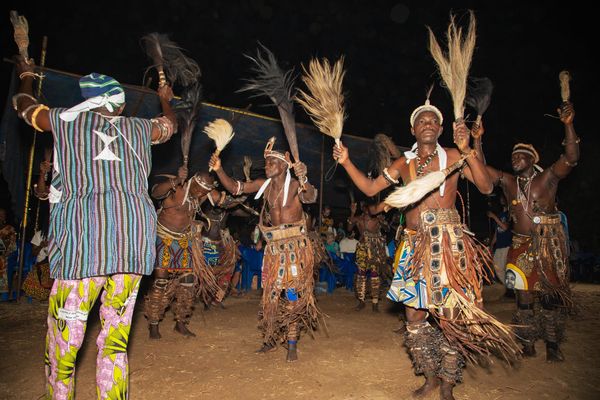
I speak from a place of personal experience. For over fifteen years, I have been learning from the Dogon, one of the few remaining indigenous communities on Earth whose knowledge systems have survived largely intact through millennia of persecution. What I have received through that relationship has shaped how I think, how I parent, how I practice, how I understand the world. It did not come easily or quickly. It came through years of showing up, of being unknown, of proving — slowly — that I was not there to simply take. And yet, when I come into digital spaces to advocate for this community, to seek support for the people who have sacrificed generation after generation to protect this knowledge, I am met with a particular kind of response:
"You are a gatekeeper. Give us what you have. We deserve access to what you've been given."
What strikes me every time is what that demand is actually saying underneath. It is saying: set aside your teachers. Dismiss the community that has sacrificed across literally thousands of years to protect this. Detach yourself from that lineage and simply deliver the contents to us… because we deserve it. Because God, or history, or justice has ordained that we should have it. How easy that would be.
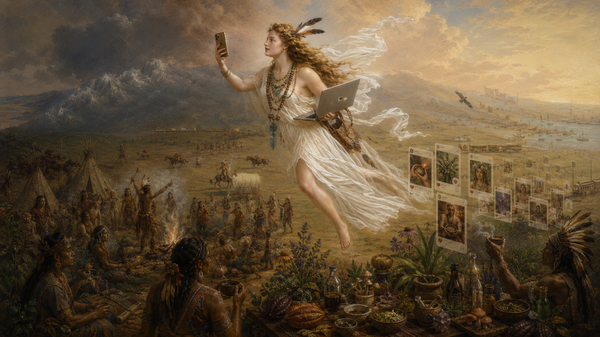
If we pause to examine what is unfolding, we find the same logic that stripped land from the Global South is now being applied to culture.
"...the right of our manifest destiny to overspread and to possess the whole of the continent..." — John L. O'Sullivan, 1845 [1]
When land was the prize, the doctrine was: God has ordained this for you, so you may take it by any means necessary. Now transpose that logic onto digital spaces. It is not uncommon to receive messages stating:
"You are gatekeeping information that is rightfully ours." Or: "You should give all of this to us for free."
These well-intentioned people, many genuinely seeking to decolonize their minds, are approaching indigenous culture with the same manifest destiny doctrine. This is the seed of entitlement sowed into the hearts of people raised in a society built on the premise that God has already chosen them. Regardless of skin color, you can become a wheel in the wagon of this movement without ever recognizing it.
Because of this entitled approach, every cultural practice, spiritual secret, and healing recipe gets put on display — naked, stripped of context, in front of the whole world. What was passed from mother to daughter in whispers, for fear of death, is now proudly taken by someone with no connection and placed on a supermarket shelf. As if to say:
"I am doing God's work — taking this information away from its culture, away from its context, away from its ‘savages’, and bringing it to all of you because we deserve this."
So what is the path for those who genuinely want to decolonize, but at every turn are met with cultural practices stripped of their context, their lineage, and their accountability?
"Take my course." "Learn indigenous secrets from me."
There is no simple answer — because the deeper problem is this: as a species, we are drawn to what is fast and easy. We gravitate, almost unconsciously, toward the McDonald's of indigenous teachings: the person who extracted the knowledge from elders, handed over a sum of money, and ran — leaving the entire community behind while building a brand on their culture. Before we even get to the question of access, there is a more honest question to ask yourself: where are you actually right now?
You do not walk into a store and demand an item you cannot afford. The same principle applies here. If you are not yet in a position to live up to the rigor that indigenous initiation requires — the travel, the years, the humility, the surrender of your own timeline, that is simply an honest assessment, not a moral failure. Start where you are. Not where you wish you were, and not where you feel entitled to be.
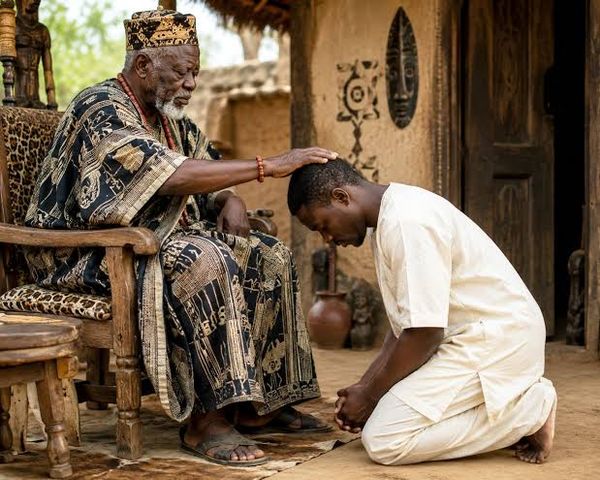
A home-cooked meal takes time and effort. You have to source the ingredients, carry the bag, chop, think through the order of cooking, manage the timing. Multiple mental faculties working at once, in service of something that cannot be rushed. In this context, it looks like leaving the comfort of your home to travel to where the stewards actually are. It looks like being turned away more than once because you are a stranger. It may mean spending years building a relationship with a community before you are trusted with concepts that their children learn first. It means showing up to be helpful, to establish yourself as someone coming to contribute, not someone who knows better, coming to extract and deliver ancient secrets to God's chosen people. Through all of that difficulty, something far more powerful is being formed than any certification can confer: humility. The slow, unglamorous work of having the seed of entitlement pulled from you. Learning what it actually means to be part of a community, not just a consumer.
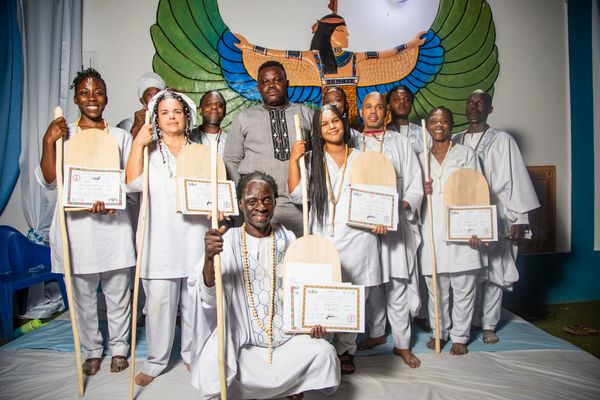
For those who are ready to take a real step toward indigenous wisdom in a context that has not been stripped of its integrity, our nonprofit institution KEBTAH has built something worth knowing about. It is an online community drawn from people across the globe, created under the direct guidance of indigenous wisdom keepers. It is not a course, but instead a living community that covers every dimension of life — how to build real community, how to heal, how to understand current events through an indigenous lens, and most importantly, how to translate that understanding into actual change in your own community. It is as close to a home-cooked meal as the digital world currently allows. There is no easy resolution to the larger cultural moment we find ourselves in. But perhaps the fast-food version will eventually give us all indigestion, and perhaps that discomfort will be the thing that turns us back toward what actually nourishes.
*If you enjoy and benefit from my writing and posts on social media, consider signing up for The Rising Firefly as a form of reciprocity. Your subscription will ultimately go to help the Indigenous People of the Dogon Tribe.