Educating A New Generation: A Natural Perspective
– 4 min read

By: Tiasta Maaheqwur
In my time working as a school psychologist in both mainstream and therapeutic schools, I noticed an epidemic. Seemingly on an upward trend each year, school classrooms are becoming more packed with children labeled as having “disabilities,” whether Learning Disabilities, ADHD, Autism or Mood Disorders. I was seeing more and more of these unique kids being labeled, categorized and boxed into by a system that doesn’t understand them or how to educate them. Any outlier to the standardized norm of behaviors or academic functioning is seen as a problem to diagnose, medicate, or remediate.
Many of the kids that I have worked with over the years don’t fit in with their peers. They often struggle with their emotions and have difficulty with a traditionally structured school day, or even shut down, refusing to attend school all together. They may demonstrate high intelligence, high creativity, but combined with oppositionality, emotionality, sensitivity to external stimuli, and attention problems, it makes functioning in traditional classrooms difficult to say the least. And to be honest, even the kids who do fit into and seem to thrive in traditional classrooms, with a closer look, may display a host of other concerns including anxiety and perfectionism, which when expressed quietly and produce academic successes, do not seem to elicit as much concern.
I’ve watched parents and professionals struggle with the new challenges their children are facing today. Children now are exposed to screen time and smart phones at a younger age, giving more access to immediate sensory gratification. They are used to rapid attention shifting, peer scrutiny and information overload through social media. Many are being asked to memorize more information from a younger age for state testing and are being placed in an academic pressure cooker of expectations by well-meaning parents and school staff who are only focused on the competitive road to college.
Meanwhile, they are faced with an outdated, overly structured school system, originally designed to produce good factory workers, not rising to meet the needs of children needing more play, nature, movement, and real-world problem solving skills.
With all of this, we need to ask ourselves some questions: Are these “disorders” truly on the rise or is there something else going on? And are these children who are so-called “outliers” really dysfunctional or are there hidden strengths in their inability to fit in? Are we content to blame children or have we stopped to consider the possibility of fundamental flaws in the system itself?
When I first came across the Kebtah Community about four years after graduating with a degree in psychology and launching into the field, these questions were still lingering on my mind. But it seemed like a minefield and monumental task to understand how to shift a system consistently failing children. My thinking then was that a shift would have to come from the inside; enlightened professionals and parents would have to come together to create new curriculums and systems to support these children to flourish and engage with education differently.
But as I embarked upon my initiatic journey, my perspective began to shift. I realized that sometimes change can only come from outside the system itself. I began to recognize that with monolithic institutional demands and processes, new perspectives and solutions might only emerge from a completely separate way of thinking untouched by the modern educational model. After all, solutions which emerge from within the system will only ever serve to continue and perpetuate the current system itself…
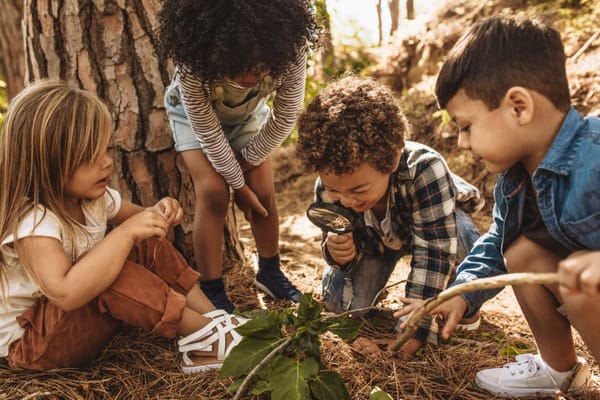
When I began to learn about the traditional initiatic education that indigenous children receive in the African bush from the age of seven, that’s when things began to make more sense. In the modern system, that’s what we’ve lost: traditional rites of passage. In a traditional initiatic education, children learn stories explaining life, family, relationships and morals. They learn about their gender, their own individual spirit and how to nurture and realize their gifts in this lifetime. Irrelevant facts or information are not the focus, but interacting with nature, understanding their lineage and where they are headed in life sets the foundation for strong adults with a sense of purpose in life and how to face real world challenges. And those children who are “outliers” are seen for who they are - their unique gifts are nurtured and highlighted, and their challenges are understood within an individual, spiritual context, addressed with intelligent solutions rather than institutionalized band-aids.
Do you ever wonder why traditional cultures don’t report nearly the rates of anxiety, ADHD, and OCD in their children as Western societies? Are we that arrogant to believe that it is simply a matter of undiagnosed concerns or the lack of “trained professionals.” Is there something else at play? Is it possible that the modern system doesn’t have it all figured out or is actively promoting a misguided value system?
I’ve had the opportunity to watch children in a traditional village play and grow up. They have their own world, their own communication system, and a freedom of spirit that is unencumbered. Who knows how many of these kids when stuck in a modern classroom would get labeled with all sorts of things that don’t fit. In the modern system we tend to attach kids from a young age to boxes and identities that don’t serve them and may even actively hinder who they are. How many of us grew up in a box, attaching ourselves to a sport, an activity, a social group, or other identity, finding ourselves walking a track that didn’t truly fit?
Without an honest assessment of where modern education is leading kids or where it has even led ourselves, we will never come to the reckoning needed to change the system. Bringing back childhood rites of passage may be the only way to realign our kids with who they are meant to be. The knowledge and wisdom of what kids need is there; it’s been existing for centuries, hidden in indigenous cultures around the world, unchanging in its effectiveness. Are we willing to listen?