Burkina Faso Beyond the Headlines
– 9 min read

By: Nezeziyah Sakuhai
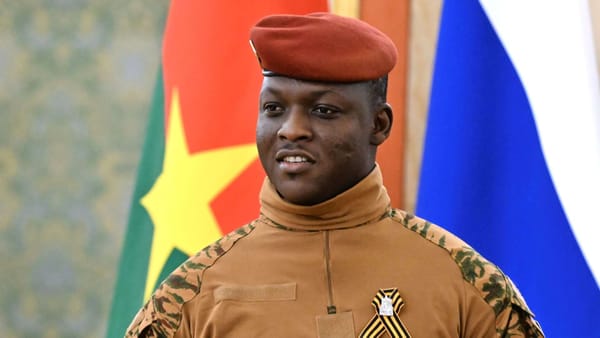
Burkina Faso is a country in Western Meritah (West Africa) that has become quite distinguished in what feels like the blink of an eye. A movement is unfolding here, one led by President Ibrahim Traoré. It is rooted in reclaiming some traditional values: economic sovereignty, independence, and the ancestral dignity that colonialism endlessly tries to erase. But for a long time, from the four walls of my peaceful home in Bobo-Dioulasso, I didn’t know it was happening at all.
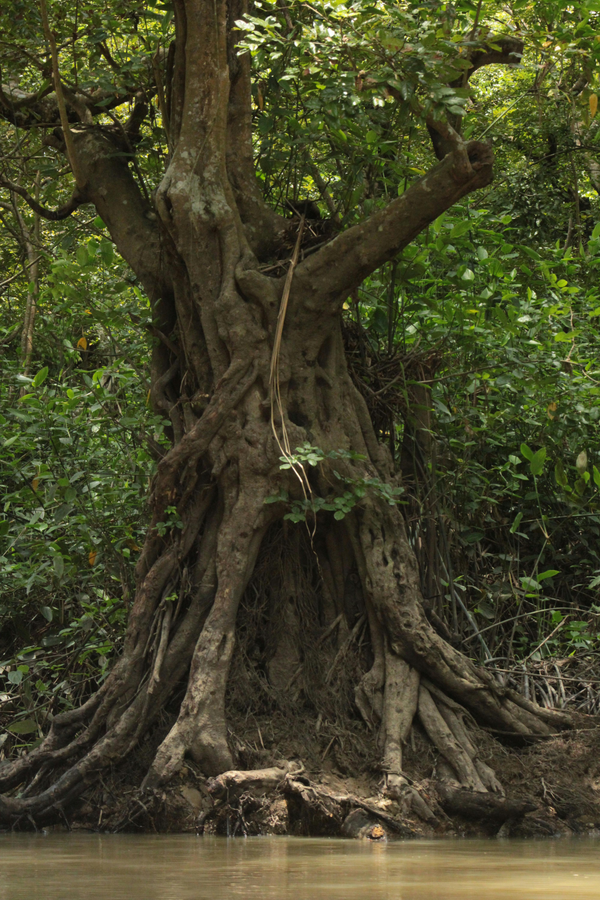
Bobo-Dioulasso is the second-largest city in Burkina Faso, yet it retains a semi-urban, tranquil atmosphere. Mango trees and wild plants line our streets. As I write this, I hear a vibrant symphony of birds. Then there is the lively chatter coming from my friends next door. My activities revolve around meals, study and syncing myself to the rhythm of my family, community and nature. As a repatriated mother, I was usually immersed in routine, but not always reality.
Sometimes I had this feeling of being out of the loop, like everyone but me understood what was happening in Burkina Faso. Whenever we called each other, my friend in Chicago would always ask for the latest news about President Traoré. In fact, she was already aware of the president’s new projects.
On the other hand, my siblings occasionally sent photos and urgent links about violent attacks. One day, my brother suggested that Burkina Faso was being led into trouble by the President. Your president is getting friendly with Russia. I dismissed his warning with, “Seems like the US might be having another war soon, too.” Trying to be clever instead of curious.
If I had just asked him why he made that comment,I might have unraveled the story sooner. Eventually, I came across a social media post about the global "Hands Off Burkina Faso" protest scheduled for April 30. The trigger? Comments made by U.S. General Michael Langley during a Senate Armed Services Committee hearing. He accused Traoré of using Burkina’s gold reserves to protect a "junta regime." This statement sparked global backlash, and now it has sparked my own curiosity. That moment compelled me to start investigating.
I started digging deeper into reports, posts, and articles to make sense of them and process the economic and political jargon into something readable and relatable. I wanted to help people like me – especially those living in the West and typically disconnected from the context — to grasp what was happening.
What I discovered was much more layered than I could have imagined. Compared to the Chicagoland area where I'm from, Bobo Dialasso seems relatively safer. However, not all regions in Burkina Faso have the same vibe. Some parts of the country, especially the northern and eastern, carry stories of violence and displacement. But also, they bear stories of resilience, resistance, and strategy. There have been two big problems in Burkina Faso: terrorism in some parts and overwhelming neo-colonialism. Traoré's military government is fighting them both.
Although I live in a more residential section of Bobo-Dioulasso, miles from downtown, progress is evidently happening all around me. I am told that there are some visible signs of construction "en ville", or in the downtown area. For example, there are new housing developments, the construction and reopening of produce factories that hire and train Burkinabé people, and the main road leading to Ouagadougou has undergone construction. The transformation is happening so close to me. But for a long time, I remained unaware because I rarely went into town or checked the news.
Decolonization

Ibrahim Traoré seized presidential power through a coup in September 2022. He then switched the government's focus to the fight against terrorism, especially in the Sahel and northern regions of the country. This aligns with the reasons he gave for overthrowing Lt. Col. Damiba: Damiba’s failure to defeat jihadists and protect civilians as he had promised. Once in the presidency, Traoré fired the entire executive cabinet.
On September 16, 2023, Burkina Faso withdraw from the ECOWAS, a regional block focused on economic integration, political stability and regional security. Along with the presidents of Mali and Niger, who also exited, he founded the AES (Alliance of the Sahel States). “There can no longer be any question of our countries being a ‘cash cow’ for France,” stated Lt. General Tiani, President of Niger and head of Niger’s ruling National Council for the Defense of the homeland, following a coup in his country. The AES prioritizes mutual defense, sovereignty and regional stability in the Sahel.
The AES is renegotiating foreign tax-free mining contracts, especially in the gold industry. But it doesn’t end there; they are taking full control of many mining operations and ownership rights within their member countries. This means that foreign executives can no longer pocket most of the revenue.
To take steps towards greater independence, the AES plans to launch a gold-pegged currency, has already increased domestic food production, and prioritizes local hiring and training. (In Bobo, at least five food processing factories, including one for cashews, have been built during the reform.)
Despite the challenges in security and the mining industry, Burkina Faso’s economy improved dramatically in 2024. Even the IMF (a global financial institution dominated by European powers) admitted a commendable surge in Burkina’s GDP (gross domestic product) for that year. The Burkina government accomplished this while relying less on foreign aid.
However, Traoré, like several other predecessors who have fought for independence for African nations, is seen as a threat to Western powers. According to Newsweek Nigeria and other outlets and timelines, Traore has survived 19 assassination plots. These plots involved military officers and activists suspected of being backed by foreign agents. Many Western powers would prefer weak leadership and instability within Burkina Faso.
“Destabilization” and Displacement
The West has an epic role to play in Burkina Faso’s destabilization. After the 2011 NATO-backed assassination of Muamma Gaddafi and the collapse of Libya, massive loads of Libyan military arms fell into the hands of jihadists. Additionally, foreign intelligence sometimes manipulates disillusioned youths from Western Meritah into joining the jihadists. By June 2022, Mahamadou Issoufou, former President of Niger and appointed ECOWAS mediator to Burkina Faso, stated, "Today 40% of the territory is out of the control of the state. Authorities in Burkina Faso control just 60% of the country." As a result of this jihadist domination, many indigenous peoples are forced to flee. In June 2023, Burkina Faso's government officially acknowledged the internal displacement of more than 2 million people, about 10% of the population.
These are not just statistics because I have spoken to some of these displaced people. For example, one of our home's former guardians, or night watchmen, shared how he once served as a pastor in his village. One day, while he was at church, armed militants attacked his home and even killed his three-year-old child. He eventually relocated to Bobo Dialousso. Here, his wife reunited with him after walking an exorbitant number of kilometers on foot to Bobo. (I handed him a Rising Firefly magazine, which he was so impressed by. He did, in fact, ask me if it was a white man that led the institution that produced the magazine. When I replied “No,” he was even more fascinated.)
During some of Kebtah’s annual pilgrimages, I have traveled with other pilgrims to Togo, a country that borders Burkina Faso. Some terrorism has crossed the borders of the Sahel region into Togo. (Our trips are carefully timed and organized to avoid such conflicts.) There, I have met some displaced people who are related to the Naba bloodline. It is noteworthy that we visit communities where people are living in peace while practicing their indigenous culture. This is what must be guarded.

An indigenous mom in a Togo village
Propaganda
Here in Burkina, western mainstream media outlets are banned. I was itching to see what type of messages were influencing Westerners. So I bypassed access restrictions on the internet, which claimed "this site can't be reached." Once I reached these sites, I understood clearly the reasons that Burkina Faso’s government banned them. These Western media outlets portrayed Traoré as dangerous and incompetent. They blamed him for violent military attacks on civilians. On one French website, post after post, journalists mocked Traoré and prematurely predicted that he would fail disastrously. Mind you, the transformation is still in its early stages. Clearly, these institutions had an agenda, including demoralization.
Examples of banned Western mainstream media outlets include:
Counter-terrorism and Public Order
President Traore’s military government has methods for combating terrorism and maintain public order that differ from those in the West. It has kicked out French counter-terrorism military forces and relied more on Russian aid. Also instrumental is the use of pro-government militias, including VDPS (Volunteers for the Defense of the Homeland), which operate in coordination with the military. These are critical to Traoré’s counterterrorism strategy. Recently, for example, the VDPs strategically intercepted a convoy of 1000 jihadists in Burkina Faso.
Additional opposition to the military government often comes in the form of NGOs (non-government organizations) with long histories of supporting imperialism. Take, for example, Human Rights Watch, which broadcasts reports on the ongoing, severe conflict between the military and many members of the Fulani ethnic group. Their reports appear very official but are shaped by unreliable sources of information.
For example, an Al Jazeera reporter interviewed a Burkina Faso jihadist on a video call. The insurgent, a Fulani (of indigenous ethnicity), openly admitted that he had become second in command among a group of local Al-Qaeda jihadists. According to him, many lower caste Fulanis become drawn into a vicious cycle. After suffering abuses from VDPs, they seek to retaliate. The opportunity arises when the jihadists recruit them; they willingly join, like someone would join a gang; then they clash with the military. The line between ‘civilian’ and ‘armed combatant’ becomes obscure, but NGOs will definitely claim that the victims were civilians. These are the types of nuances that reporters from NGOs omit..
It's true, local journalists and others have disappeared at the hands of local authorities. They have sometimes reappeared on the frontlines of battles. The message to journalists who claim that there really is no war being funded or fought receive a clear message: “Witness for yourselves that there is really a war going on in the bush. And don’t spread lies again.”
Yet, overall, foreigners have no business interfering in these conflicts. They claim "human rights violations" to conveniently justify foreign intervention. This is a historically used tactic of imperialist nations: attempting to destabilize revolutionary movements by planting seeds of skepticism, confusion, and internal chaos within the targeted country. At the same time, it serves as a strategy to manufacture consent among global onlookers for future invasions into a foreign country.
On a personal level, an observer might think, "That leader has done so much, but I’m concerned about these accusations," and decide, "Maybe I shouldn't support this cause after all." But that’s exactly how revolutionary momentum can be weakened, by planting seeds of doubt without context. It’s easy to fall into the trap the enemy sets, to confuse us, to divide us, to discourage us..
Conclusion: Real Connection Requires Action
Stepping out of a bubble is about more than collecting information.. It’s about ending ignorance and individualism, and building with others. We are all interconnected and have a common destiny. Updating oneself on news and politics and engaging in conversations can all be healthy activities. And not everyone has to be on the literal battlefield to make a difference in the community and on the continent. Even ancestors fight fiercely from the invisible world. If colonial religions and jihadists retreat, then traditional culture can have more territory to flourish.
As an allied member of Kebtah, I sense how the objectives of Kebtah's revolutionary mission, traditional societies and the AES all intertwine. With the wish of carrying some of this spirit, I’m trying to see things through the eyes of an activist. It’s easy to slip back into a bubble. The best way to avoid sliding into a “bubble” is to be proactive. I’m listing some steps you too can take to align with the vision, sovereignty, economic prosperity, and cultural revival in the Sahel States and Western Meritah:
The movement in Burkina Faso is not only for Burkinabé citizens, soldiers, and politicians. If you cook, clean, work a nine-to-five job, take care of the kids, or own a business, it’s for you. Continental Africans and diasporans have a shared history of enslavement and colonization. As long as we share the vision of decolonization and cultural preservation, we can all stand in solidarity to end exploitation, reclaim independence and sovereignty in Meritah, and open future doors.

Future leaders of Meritah